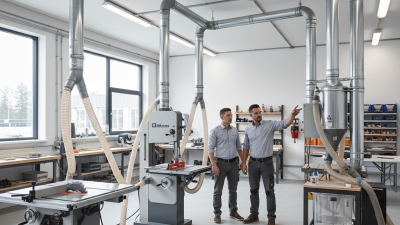
How to Choose an Automated Dust Collection System?
Choosing an Automated Dust Collection system is not simply a matter of buying the largest fan. The right decision begins with the dust itself, the equipment producing it, and the people working nearby. Wood dust, metal particles, mineral powder, and combustible residues behave differently. Their risks also change with moisture, temperature, and particle size.
Bill Pentz, a widely cited dust-collection educator, states, “The fine dust is what kills.” That warning remains highly relevant. A visible pile on the floor is easy to notice. Invisible particles are harder to control. Effective systems capture dust at the source, before it spreads through the workspace. They also maintain suitable airflow through correctly sized ducts, hoods, filters, and fans.
This guide explains how to compare Automated Dust Collection options with practical judgment. We will examine airflow requirements, filter efficiency, automatic cleaning, bin capacity, noise, energy use, and maintenance access. Differential-pressure gauges and full-bin sensors can provide useful warning signs. Spark detection may also matter in certain industrial environments. Details matter.
There is no universal package.
A larger collector can still perform poorly when ductwork is restrictive or poorly sealed. That mistake is common. System suppliers may provide impressive airflow figures, yet actual performance can change after installation. Measure the operating conditions. Check the filter condition. Review the manufacturer’s technical data and qualified safety guidance.
The best choice balances protection, reliability, operating cost, and future expansion. It may not be the cheapest option. It should be understandable, serviceable, and suitable for the specific process.
Define the Dust, Airflow, and Workspace Requirements
How to Choose an Automated Dust Collection System?
Define the Dust, Airflow, and Workspace Requirements
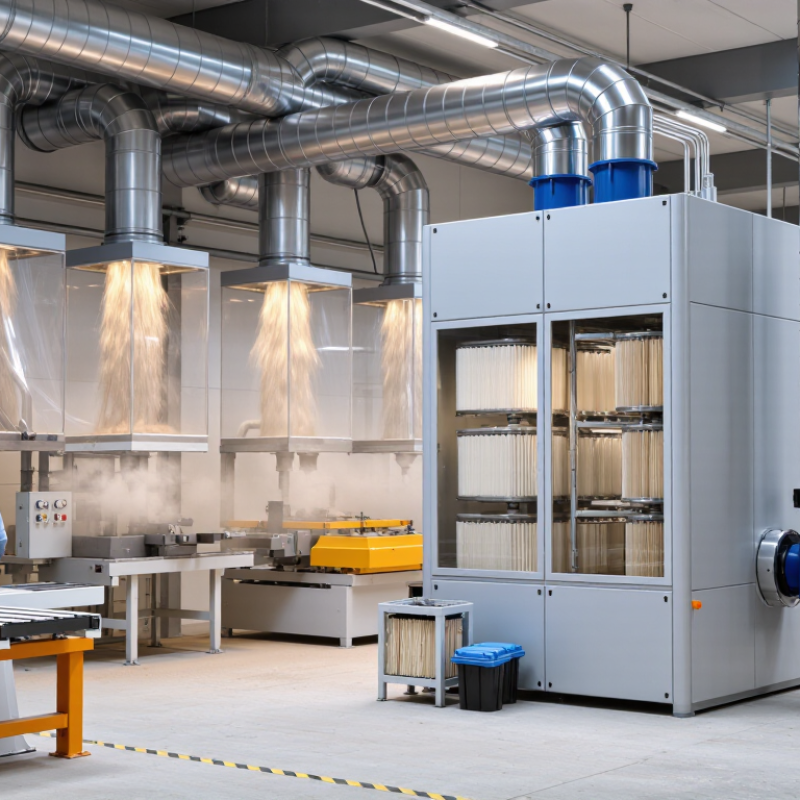
Begin by identifying the dust, not the collector. Record its material, particle size, moisture, temperature, and production rate. Fine sanding dust behaves differently from heavy chips. Some dust also requires a qualified safety review because ignition risks can vary. Use current safety data and local requirements before selecting equipment. Guessing here can create expensive problems later.
Measure the workspace carefully. Note each pickup point, duct length, bends, branch openings, and machine schedule. Calculate the airflow required at the most demanding operating condition, not during an empty shift. Check capture velocity, static pressure, filter loading, and fan capacity together. Automated controls should respond to machine use, pressure changes, and bin level. A sensor may save energy, but poor placement can produce misleading readings. Your first airflow estimate may be wrong. Recheck it after installation.
Tips: Walk the workspace while machines operate. Watch where dust escapes. Use a simple floor plan and mark every connection. Leave access around filters and collection bins. Test airflow at the farthest pickup point, then inspect visible dust deposits. Ask a qualified engineer to review combustible or unusually fine dust. Small details matter, especially when doors open, workers move materials, or production changes during the day.
Compare Dust Collection System Types and Filtration Methods
Choosing an automated dust collection system starts with dust behavior, not equipment labels. A central system suits several machines, while point-of-use collection usually reduces duct losses and simplifies maintenance. Cyclones remove heavier particles before filtration. They are useful pre-separators, but they do not replace fine filters.
OSHA’s respirable crystalline silica standard sets an 8-hour exposure limit of 50 µg/m³. That figure makes source capture and final filtration inseparable.
Cartridge filters provide a compact design and large filtration area. Baghouse filters generally tolerate heavier dust loading and longer operating cycles. Pulse-jet cleaning can restore airflow, although compressed air increases noise and operating costs.
Wet scrubbers may suit sticky or hot dust, but they create wastewater and require additional controls. According to ASHRAE Standard 52.2-2022, a MERV 13 filter must achieve at least 85% average efficiency for 1–3 micrometre particles. This rating helps compare filters, but it is not a direct substitute for industrial dust-collector testing.
EPA’s AP-42 guidance also emphasizes particle size, operating conditions, and control efficiency when estimating emissions. Monitor differential pressure automatically.
Check airflow at the capture point. A clean filter is not always an effective system. Poor hood placement can defeat expensive filtration. This is where many designs need a second look.
Evaluate Automation, Safety Features, Maintenance, and Energy Use
How to Choose an Automated Dust Collection System?
An automated dust collection system should match your process, not just your floor space. Begin by checking airflow at each pickup point during normal production. Automation should adjust fan speed when demand changes. Variable-speed drives can reduce wasted energy during quieter periods. However, aggressive speed reductions may weaken capture at distant workstations. That trade-off deserves measurement, not guesswork.
Safety features require practical testing. Look for pressure monitoring, filter alarms, emergency stops, grounding, and suitable spark-control equipment. Confirm that ductwork, filters, and collection containers suit the dust characteristics. Follow applicable local codes and qualified engineering guidance. During commissioning, record pressure readings and inspect connections for leaks. A small leak can create visible dust near a doorway. It is easy to overlook.
Maintenance affects reliability and energy use. Choose access panels that allow safe filter inspection without awkward lifting. Automatic cleaning can extend filter life, but it still needs scheduled checks. Review energy data monthly, including fan load and compressed-air use. Tips: Set alarm limits from real operating data. Keep spare filters and seals available. Train operators to report unusual noise, vibration, or rising pressure. I would not rely on automation alone. Sensors can drift, and operators sometimes silence alarms too quickly. A short manual inspection may reveal what software misses.
Select the System That Fits Your Budget and Future Expansion Needs
Choosing an automated dust collection system should begin with expansion, not the lowest purchase price. A small collector may fit today’s production, then restrict tomorrow’s added machines. OSHA’s combustible dust incident summary recorded 281 explosions, 119 fatalities, and 718 injuries from 1980 to 2005. That history makes containment, monitoring, and safe maintenance essential budget items. Start with dust type, particle loading, moisture, temperature, and operating hours. Test the dust when uncertainty remains.
Compare total cost over five to ten years. Include fan energy, filter replacement, compressed-air use, disposal, inspections, and downtime. Specify automatic cleaning, differential-pressure sensors, level alarms, and variable-speed control. These features cost more initially. They can prevent clogged filters from quietly reducing capture. A quiet warning.
A modular design usually supports expansion better than one oversized collector. Reserve connection points, electrical capacity, and floor space for future branches. Size the fan for current demand, but confirm its control range and future static-pressure allowance. Ask for performance data at actual airflow, not maximum capacity. NFPA 652 requires a documented dust hazard analysis for combustible dust processes. That review can expose costly assumptions before construction.
A staged purchase may be wiser. Install the controls and main duct backbone now, then add branches later. However, this approach is not automatically cheaper. Poorly planned ductwork can increase resistance and energy use. NFPA Research reported an annual average of 37,910 industrial and manufacturing structure fires from 2011 to 2015. Have an engineer verify airflow, transport velocity, explosion protection, and local code requirements. Request competing lifecycle calculations. The lowest bid is not always the lowest cost.
How to Choose an Automated Dust Collection System?
Compare common system configurations by typical airflow capacity and future expansion potential before setting your budget.
Planning ranges shown are typical industrial design values: point-of-use systems generally serve one or two collection points, modular systems commonly support several drops, and centralized systems are selected for larger multi-machine layouts. Actual airflow, cost, filtration, and explosion-protection requirements must be confirmed through a site-specific engineering assessment.